While ChatGPT has nearly a fifth of Google’s query volume, people use the platforms in different ways.
I wanted to see how ChatGPT compared to Google, not just on the total number of searches, but also searches where they compete with Google, how much traffic they send to websites, and the CTR differences in the systems.
Let’s dig in.
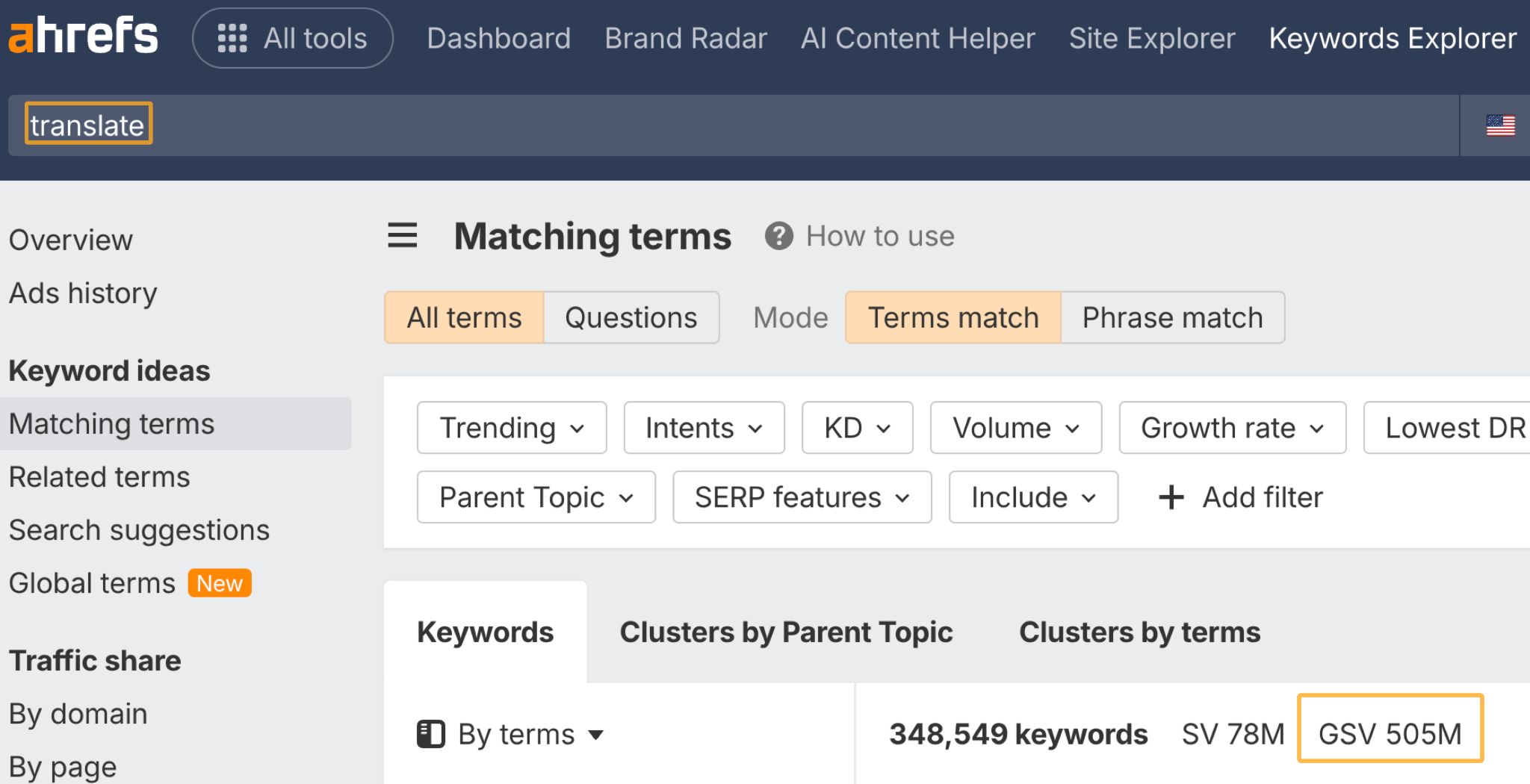
I’ve seen some studies that used those numbers for comparison, but I don’t agree with them. Google does more than just search. There are tools for calculations, translation, and more which are included in other categories in the study. Even things like coding help are categorized differently, but devs have been searching issues on Google (and Stack Overflow) for many years.
For example, we see hundreds of millions of searches every month for people looking to translate things on Google.
Looking at their examples, I would classify 65% of the searches on ChatGPT as things that were traditionally searched on Google. This is higher than what the researchers classified, but I have more access to data on what people search than they did.
| Category | % of ChatGPT Usage | ChatGPT Daily Volume | % of Google’s Volume |
|---|---|---|---|
| Pure Search (facts, products, recipes) | 24.0% | 600 million | 4.38% |
| Asking Intent (search + advice) | 51.6% | 1.29 billion | 9.42% |
| My Search Classification (things people traditionally searched on Google) | 65.0% | 1.625 billion | 11.86% |
ChatGPT gets ~12% of the search volume of Google for things people have traditionally searched for on Google. For some comparison, it’s estimated that Bing gets 1.2 billion searches a day. ChatGPT has surpassed Bing in search!
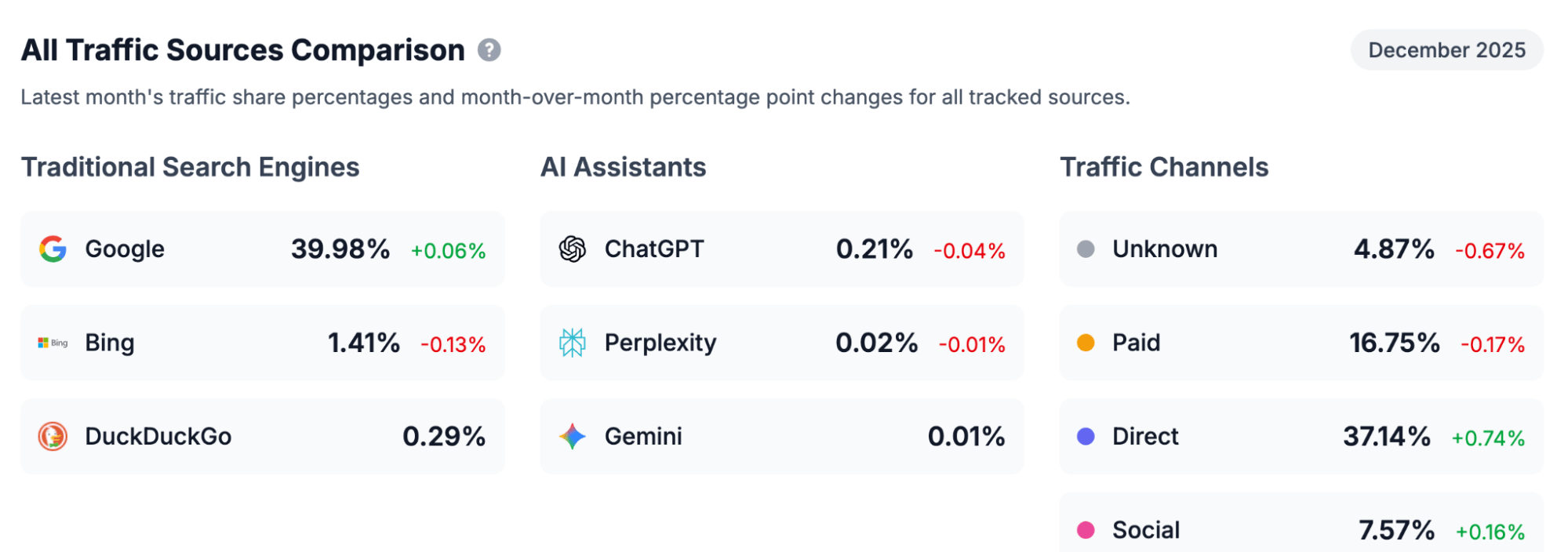
If we look at the traffic coming to websites, Google sends 190x more traffic to websites than ChatGPT. Google makes up nearly 40% of traffic to websites and ChatGPT just 0.21%.
This is where the platforms diverge completely.
I ran the numbers for the different classifications, but again I believe that my search classification is more accurate than those from the paper. I came up with ChatGPT having a 96% lower CTR than Google.
Calculation method: Estimated CTR = (Traffic Share % / Daily Queries in billions) × 10
| Platform/Category | Daily Queries | Traffic Share | Estimated CTR | CTR vs Google |
|---|---|---|---|---|
| 13.7 billion | 39.98% | 29.2% | Baseline | |
| ChatGPT (Pure Search) | 600 million | 0.21% | 3.5% | 88% lower |
| ChatGPT (Asking Intent) | 1.29 billion | 0.21% | 1.6% | 94% lower |
| ChatGPT (My Search Classification) | 1.625 billion | 0.21% | 1.3% | 96% lower |
| ChatGPT (All Usage) | 2.5 billion | 0.21% | 0.84% | 97% lower |
Final thoughts
Google remains the dominant search engine with 5.5x more daily activity. ChatGPT made headway into search in a short amount of time. They’ve passed longtime search rivals like Bing.
However, I’m not sure if website owners will accept the drop in traffic or if they will eventually push back on AI search.
Similar Posts
20+ Best Photoshop Action for Glitch Photo Effects in 2025 — Speckyboy
Glitch effects are a great way for making a statement with your photos or graphics. However, manually creating these effects can be difficult. Luckily, Photoshop actions provide a simple solution. Glitch effect Photoshop actions are pre-made adjustments or edits that allow you to create digital effects that mimic the look of technological glitches, malfunctions, or…
2024 Black Friday trends: Top strategies from Woo stores and partners
We published our Black Friday Cyber Monday report in September knowing the data was just the beginning. The trends surrounding these major online sales made sense: Stock up on inventory, optimize your customer experience, diversify your payment options, make sure your site can handle the traffic, and let online shoppers know that cyber week sales…
9 Best Dedicated Server in India 2026, February🇮🇳Top Picked
Have you ever struggled with controlling your server environment? Or found yourself frustrated due to unexpected downtimes and server crashes, especially during malicious traffic attacks that you never saw coming? These challenges are common when you’re relying on low-quality hosting services that can’t handle sudden spikes. That’s where Best Dedicated Server Hosting in India steps…
How to Implement a Shipping Strategy
If you sell physical goods, your shipping strategy is one of the most important aspects of your success. Customers shopping online expect to pay as little as possible, but receive products quickly and in perfect condition. How can you meet these expectations without losing money and set your business up for growth? Start by establishing…
Google Web Guide: What It Is, How It Works, and What It Means for SEO
Just as we were wrapping our heads around AI Overviews, Google unveiled another new search experience: Web Guide. It’s a big change in how Google interprets intent and presents information. Think of it as a dynamically-generated, “magazine” SERP, that curates AI summaries and organic results. What’s different about Web Guide is that—unlike AI Overviews or AI…
10 Best Hostinger Alternative 2025, Sep | Top Competitors
When it comes to affordable web hosting services, Hostinger is often one of the first names that pops up. It’s budget-friendly, beginner-friendly, and offers a simple platform for individuals starting their online journey. However, when it comes to handling enterprise-level workloads that need powerful hosting solutions, the question comes, Can Hostinger provide big dedicated solutions?…