Traditional search tracking is built on a simple promise: type a query, get a result, and track your ranking. AI doesn’t work that way.
Assistants like ChatGPT, Gemini, and Perplexity don’t show fixed results—they generate answers that vary with every run, every model, and every user.
“AI rank tracking” is a misnomer—you can’t track AI like you do traditional search.
But that doesn’t mean you shouldn’t track it at all.
You just need to adjust the questions you’re asking, and the way you measure your brand’s visibility.
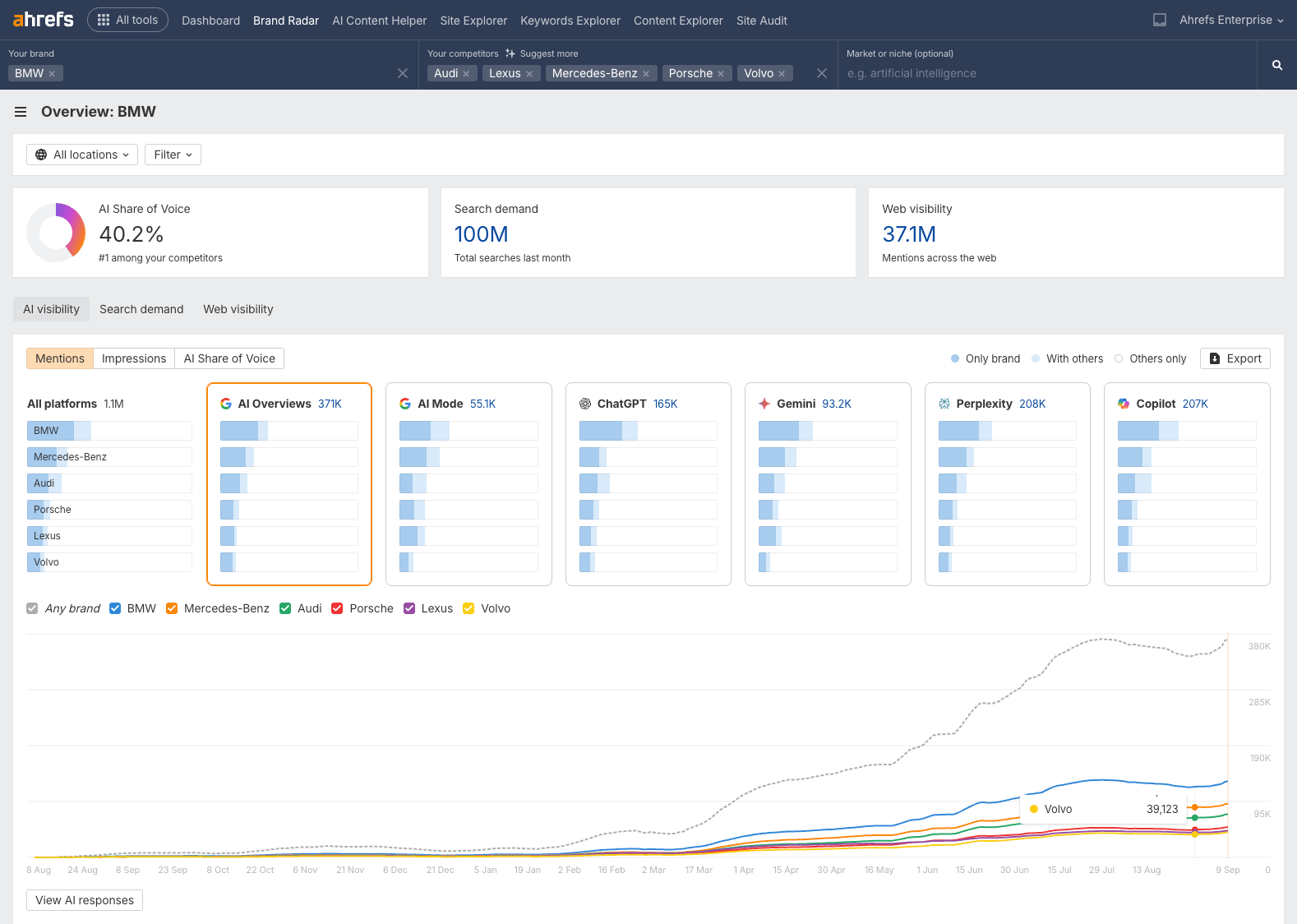
A major stumbling block when it comes to AI search tracking is that none of us know what people are actually searching en masse.
Unlike search engines, which publish keyword volumes, AI companies keep prompt logs private—that data never leaves their servers.
That makes prioritization tricky, and means it’s hard to know where to start when it comes to optimizing for AI visibility.
To move past this, we seed Brand Radar’s database with real search data: questions from our keyword database and People Also Ask queries, paired with search volume.
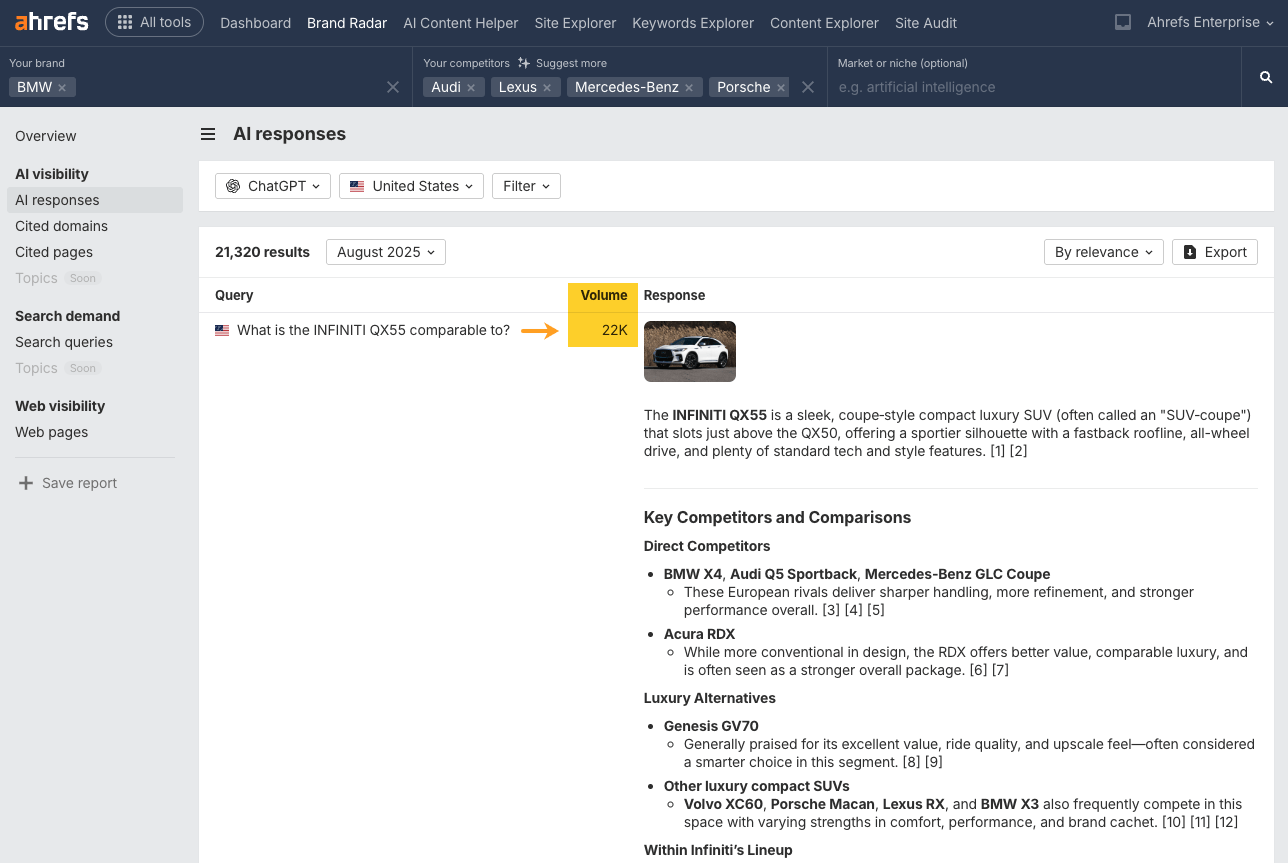
These are still “synthetic” prompts, but they reflect real world demand.
Our goal isn’t to tell you whether you appear for a single AI query, it’s to show you how visible your brand is across entire topics.
If you can see that you have great visibility for a topic, you don’t need to track hundreds of specific prompts within that topic, because you already understand the underlying probability that you’ll be mentioned.
By focusing on aggregated visibility, you can move past noisy outputs:
- See if AI consistently ties you to a category—not just if you appeared once.
- Track trends over time—not just snapshots.
- Learn how your brand is positioned against competitors—not just mentioned.
Think of AI tracking less like rank tracking and more like polling.
You don’t care about one answer, you care about the direction of the trend across a statistically significant amount of data.
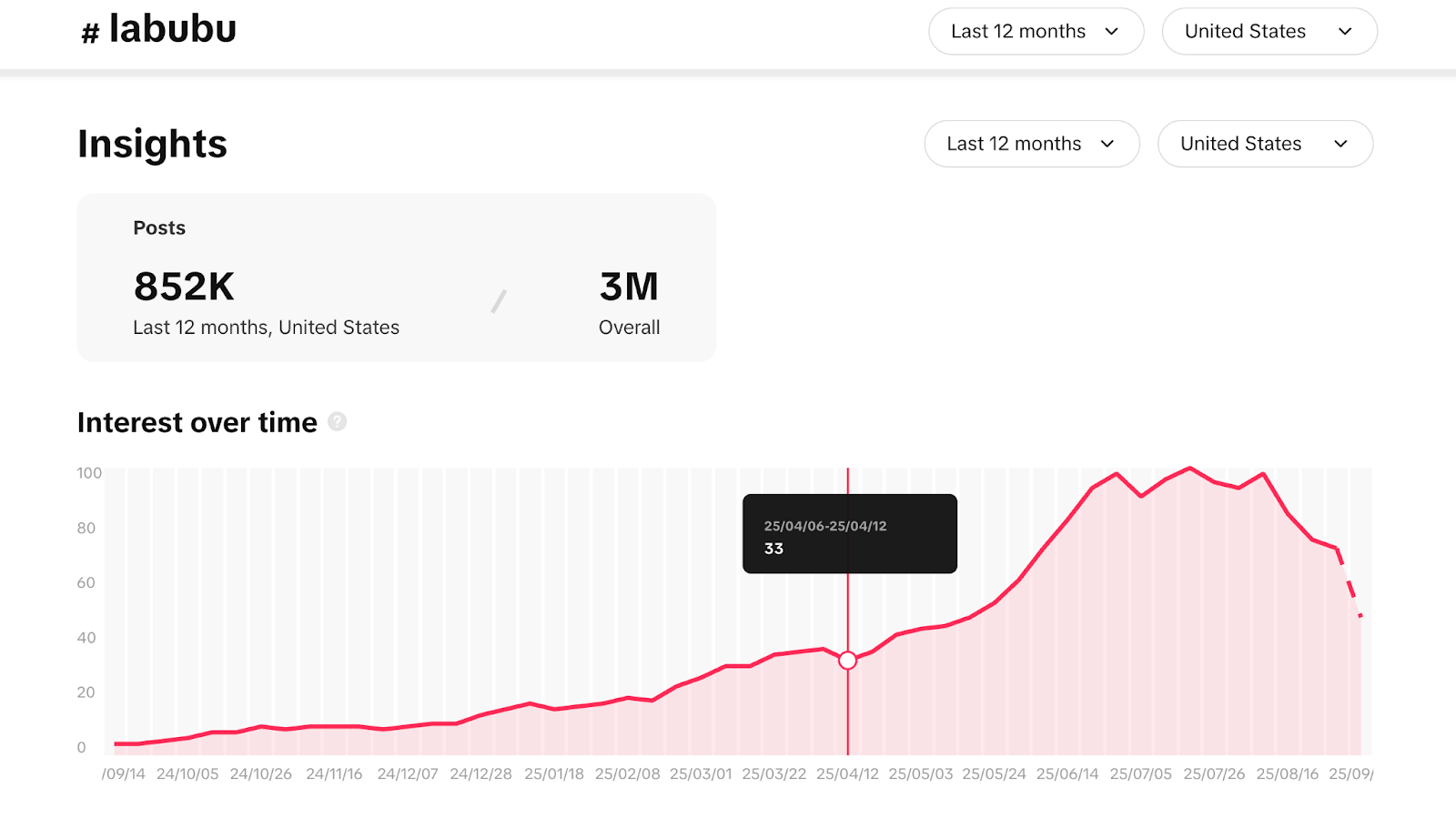
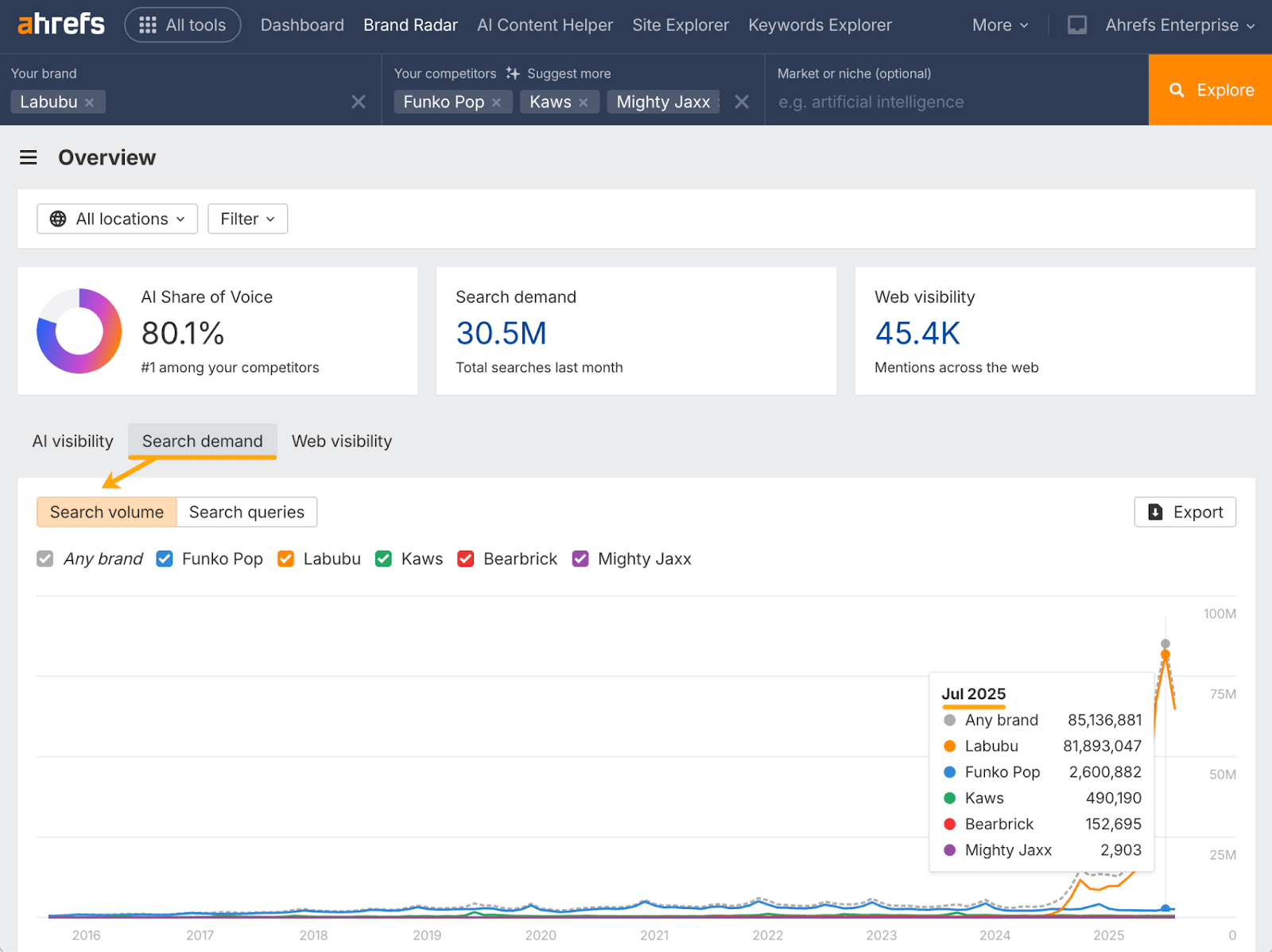
May: Thousands of “Labubu” related search queries start showing up in the SERPs.
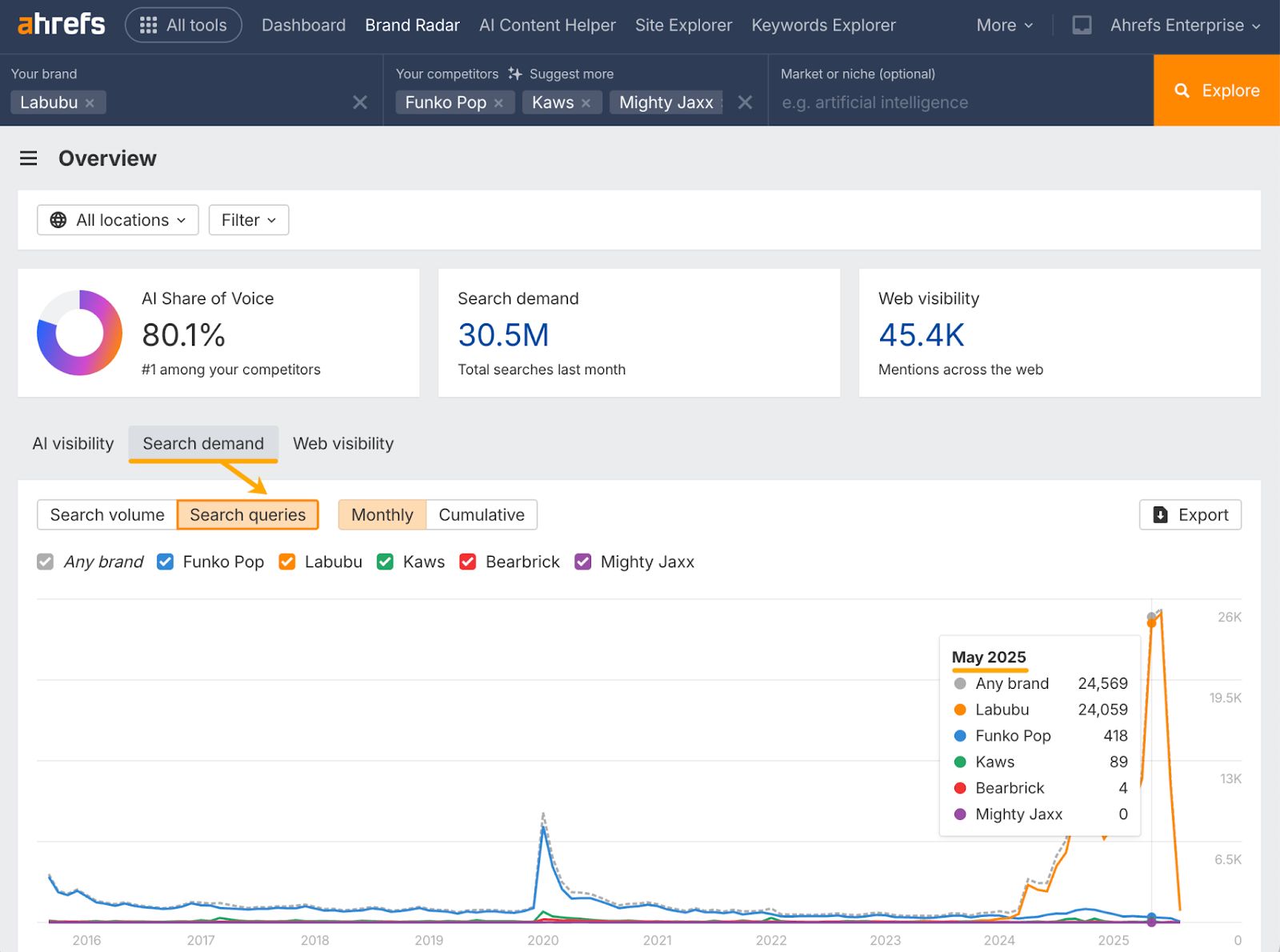
July: Search volume spikes for those same “Labubu” queries.
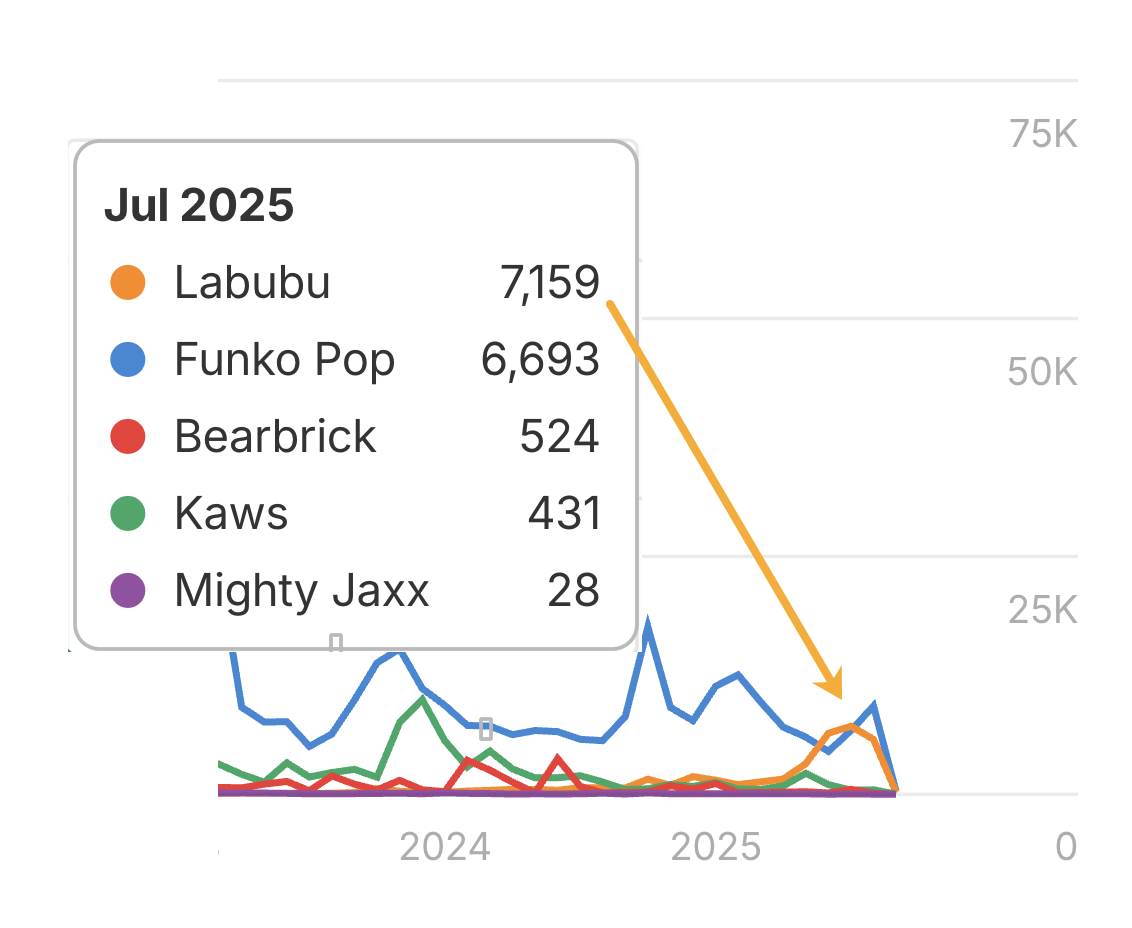
Also in July, web mentions for “Labubu” surge, overtaking market-leading toy Funko Pop.
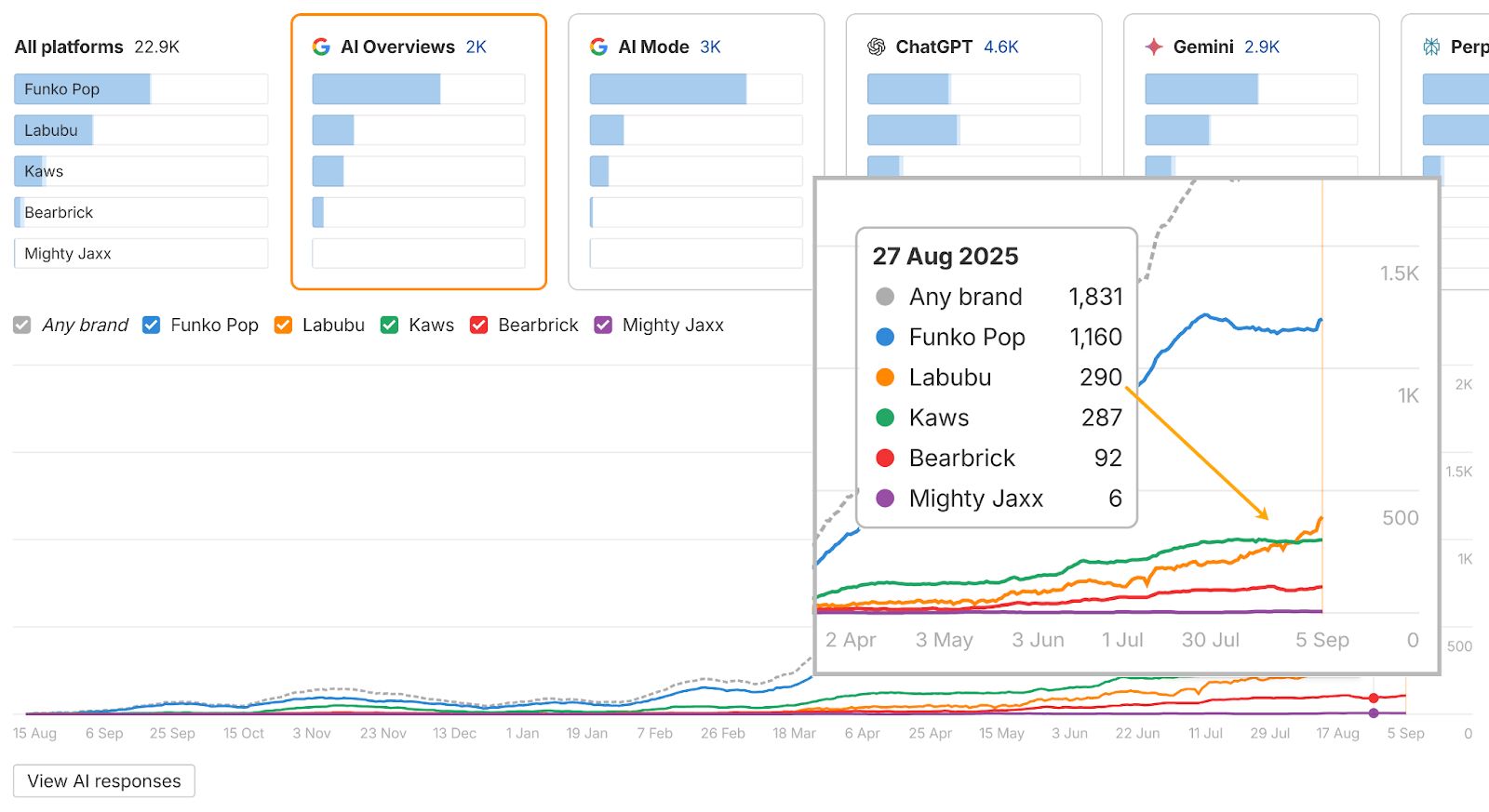
August: Labubu crosses over into AI visibility, gaining mentions in Google’s AI Overviews in late August—overtaking another leading toy brand: Kaws.
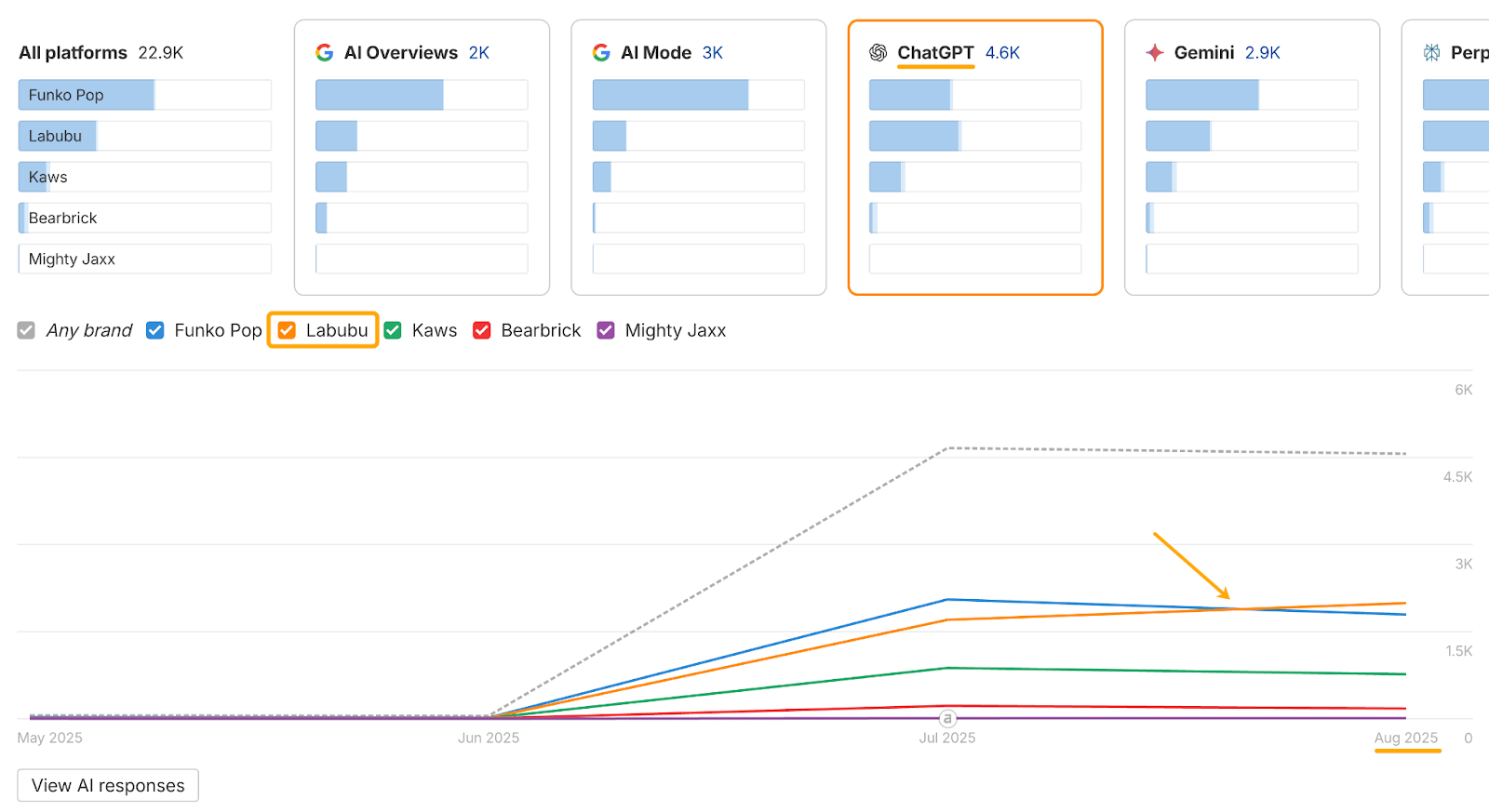
Also in August, Labubu overtakes all other competitors in ChatGPT conversations.
This example shows that AI is part of a wider discovery ecosystem.
By tracking it directionally, you can see when and how a brand (or trend) breaks through into AI.
In all, it took four months for the Labubu brand to surface in AI conversations.
By running the same analysis on competitors, you can evaluate different scenarios, replicate what works, and set realistic expectations for your own AI visibility timeline.
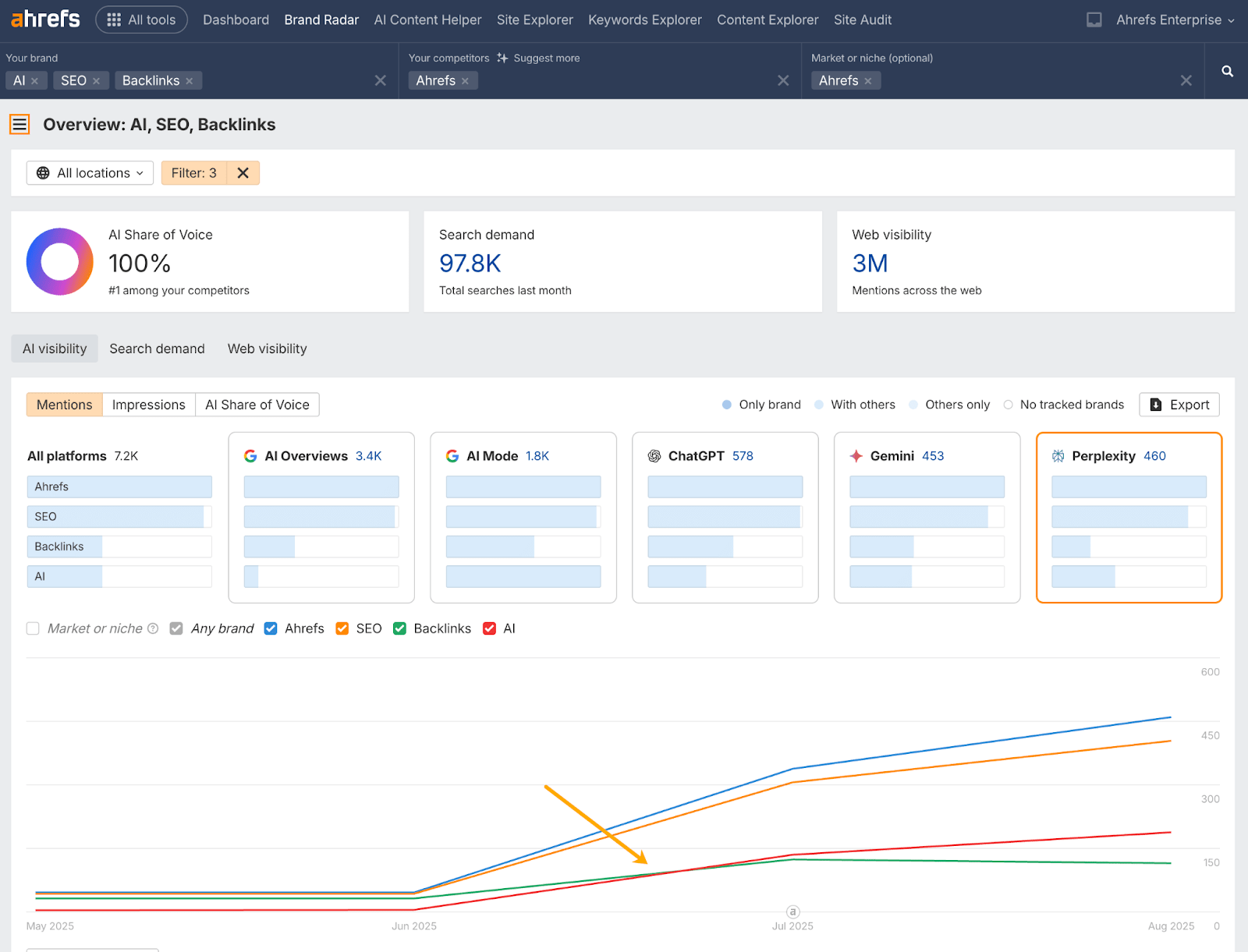
But, AI responses still describe us primarily as an ‘SEO’ or ‘Backlinks’ tool.
By putting out consistent AI features, products, content, and messaging, our positioning is now beginning to shift on some AI surfaces.
You can see this when the red trend line (AI) overtakes the green (Backlinks) in the chart below.
That means being named in AI answers is no longer optional.
AI assistants are already part of the discovery journey.
People turn to ChatGPT, Gemini, and Copilot for product recommendations, not just quick facts.
If your brand isn’t in those answers, you’re invisible at the exact moment decisions are made.
That’s why tracking AI visibility matters.
Even if the data is noisy, it shows whether you’re part of the conversation—or whether competitors are taking the spotlight.
In a perfect world, tracking AI visibility on a micro and macro level isn’t an either–or choice.
Micro tracking for high-stakes AI prompts
Micro tracking is about zooming in on the handful of queries that really matter to your business.
These might include:
- Branded prompts: e.g. “What is [Brand] known for?”
- Competitor comparisons: e.g. “[Brand] vs [Competitor]”
- Bottom-of-funnel purchase queries: e.g. “best [product] for [audience]”
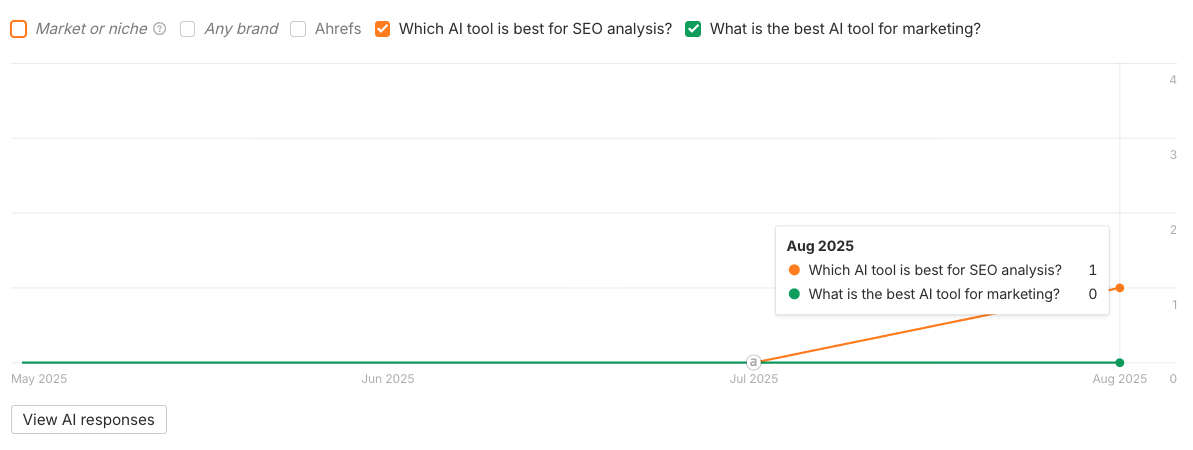
Even though AI responses are probabilistic, it’s still worth monitoring these “make or break” queries where visibility or accuracy really matters.
Macro tracking for overall AI visibility
Macro tracking is about zooming out to understand the bigger picture of how AI connects your brand to topics and markets.
This approach is about monitoring thousands of variations to spot patterns, find new opportunities, and map the competitive landscape.
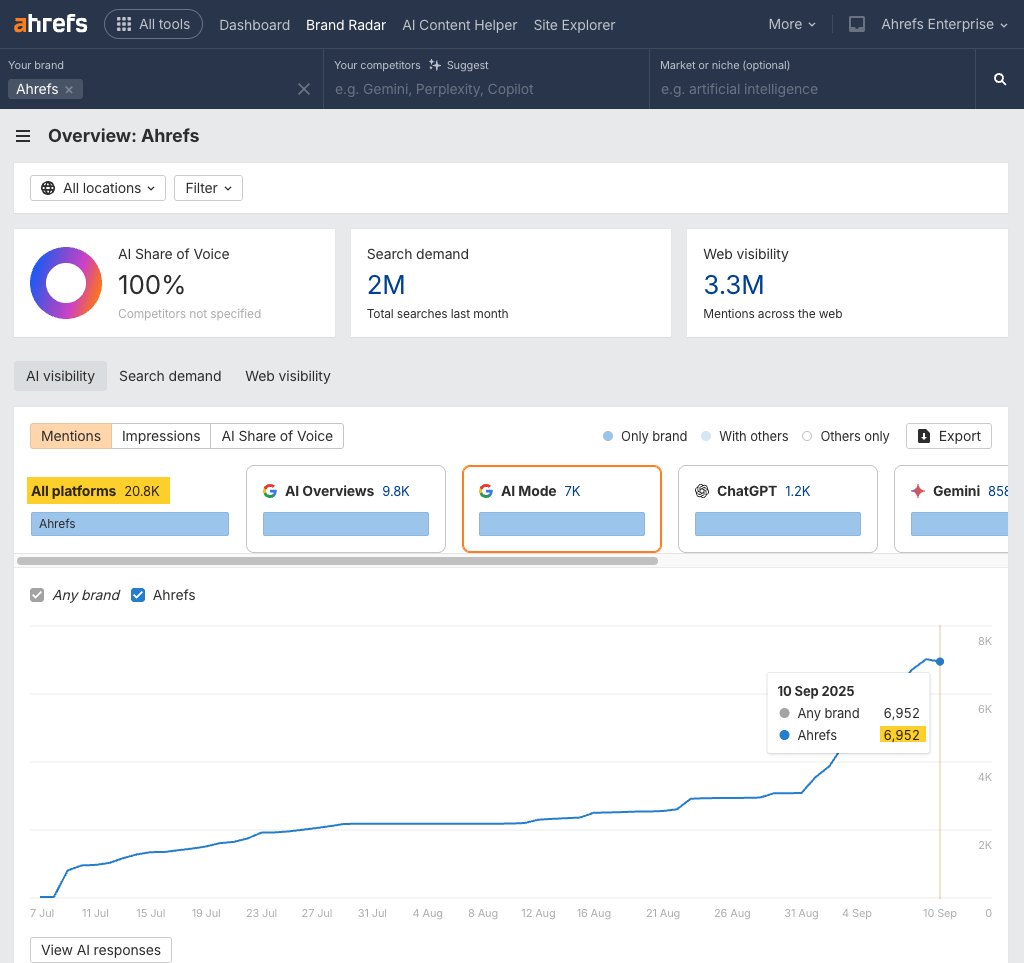
Most AI tools only handle the first mode, but Ahrefs’ Brand Radar can help you with both.
It lets you keep tabs on business-critical prompts while also surfacing the unknown unknowns.
And soon it’ll support custom prompts, so you can get even more granular with your tracking.
Looking at both levels helps you answer two questions: are you present where it counts, and are you strong enough to dominate the market?
Final thoughts
No, you’ll never track AI interactions in the same way you track traditional searches.
But that’s not the point.
AI search tracking is a compass—it will show if you’re headed in the right direction.
The real risk is ignoring your AI visibility while competitors build presence in the space.
Start now, treat the data as directional, and use it to shape your content, PR, and positioning.
Similar Posts
No Pong: From startup to multinational business with WooCommerce
No Pong is one of the most popular natural deodorant brands in Australia. They launched on WooCommerce in 2015, and have since grown from a single product to an international business with over 200 SKUs across three core markets. Their growth in popularity was supported by pivotal changes to their ecommerce infrastructure, switching hosts and…
How to move your custom site to WooCommerce (and why you should)
Running your ecommerce business on a custom-built platform can make scaling with flexibility and control a real challenge. At some point, your current setup may start to limit growth — and that’s when it’s time to consider a change. If you’re ready to explore other options for scalability, you’re in the right place. Whether you’re…
How Freelance Designers & Developers Can Be Their Own Advocate
Working solo is one of the benefits of being a freelance web designer. You don’t have a boss breathing down your neck or tracking every mouse click. That’s one reason why many of us choose this career path. On the other hand, no one has your back when things go wrong. There are no team…
Accelerate Sustainability Targets with VMware
Hosting providers are becoming more competitive in their electricity consumption. This is measured by the amount of data centre power consumption versus how much of the total Kwh is being used by the actual computing power of the data centre, known as the PUE (Power Usage Effectiveness). At a recent customer supplier day I learnt…
12 Link Builders Share Strategies That Work in 2024
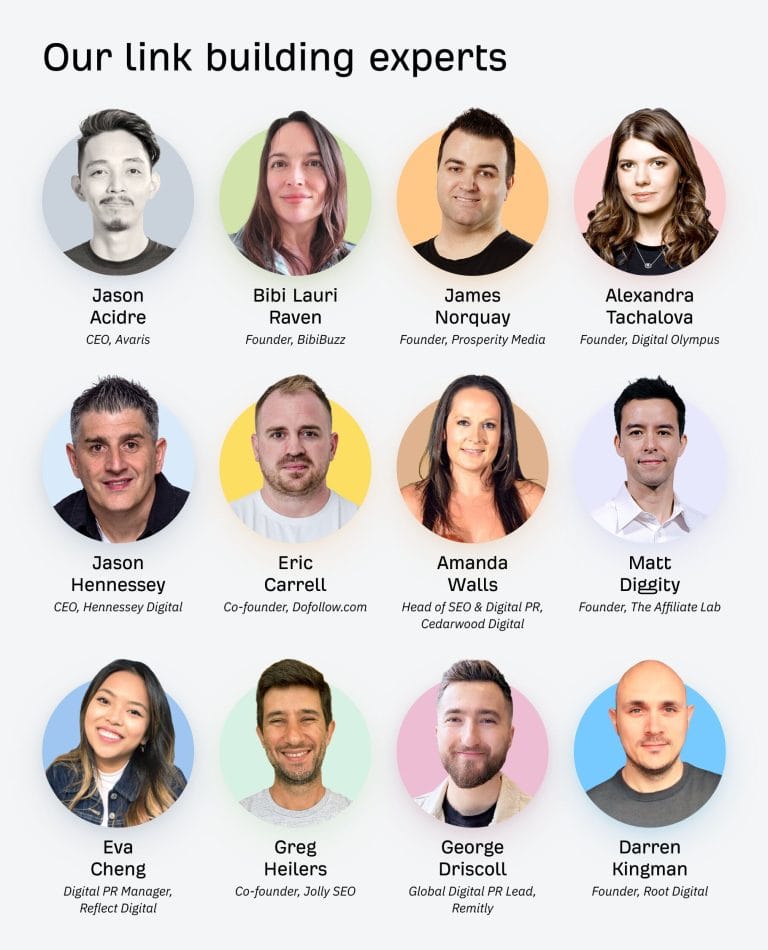
I asked 12 SEOs for the link building strategy that’s working best for them right now. Here are the tactics they shared, how to do them, and tips for success. find their email address and reach out to them. Here’s an example email Jason used: I don’t recommend copying Jason’s email word for word, but here’s his and…